
Small Batch Custom Packaging: How to Solve MOQ, Cost, Color & Lead Time Problems

Say you’ve just finished developing your first product. Samples look good, pricing is set, you’re ready to launch — and then a packaging supplier quotes you a minimum order of 5,000 boxes.
For a brand that’s still testing the market, that number doesn’t make sense. You probably don’t need 5,000 units. If you’re not even sure yet how the product will sell, 500 — or even 200 — is a far more realistic starting point.
And MOQ isn’t the only worry. What if the printed color doesn’t quite match your brand guidelines? What if production takes three or four weeks and delays your launch date? What if the per-unit price at low volume eats into your margin? What if you don’t even have proper packaging artwork ready yet?
None of these problems mean you have to compromise on how your packaging looks. They just mean the traditional packaging process — built around large production runs — wasn’t really designed with your situation in mind. This article walks through the five problems that come up most often for brands trying to source small batch custom packaging, and what actually works instead.
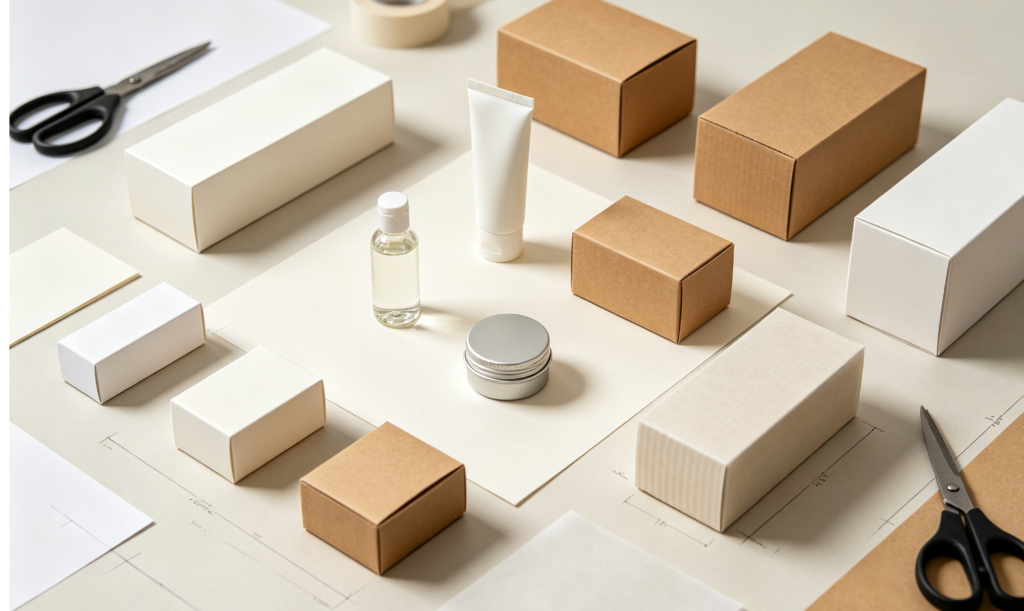
1. MOQ: Do You Really Need 5,000 Custom Boxes?
Why traditional suppliers push high minimums
High MOQs aren’t arbitrary — they come from how conventional packaging production actually works. Setting up a printing plate has a fixed cost regardless of order size, and that cost only makes sense to absorb across a large run. Tooling for a custom die-cut structure works the same way. Add in the fact that most factories buy raw board and paper stock in bulk to keep material costs down, and a large minimum starts to look like the only way the numbers work for the supplier — even if it doesn’t work for you.
Why a high MOQ is a real risk for a new brand
For an established brand reordering a proven product, 5,000 units might be a non-issue. For a brand launching something new, it’s a different calculation entirely. Money gets tied up in inventory instead of marketing or product development. Storage becomes its own cost and logistics problem. And if the product doesn’t sell as expected, or the brand’s visual identity shifts even slightly after launch, that inventory is now packaging you can’t use.
The 200–500 range: where plate printing still makes sense
This is usually the point where people assume digital printing is the only option — but it isn’t always, and it’s worth knowing the difference. For orders in the 200–500 piece range, we run traditional plate printing, not digital. Efficient short-run plate printing at this volume is actually one of our factory’s core strengths, and it comes with a real advantage: plate printing supports true Pantone spot-color matching, which digital printing can’t fully replicate.
Digital printing comes into play below that — for orders under 200 pieces, plate printing’s fixed setup cost is hard to justify, so we shift to digital, since it skips plate-making entirely and prints straight from a digital file. It’s the more practical route once volume drops that low, even though (as covered below) it comes with a color-matching tradeoff worth knowing about upfront.
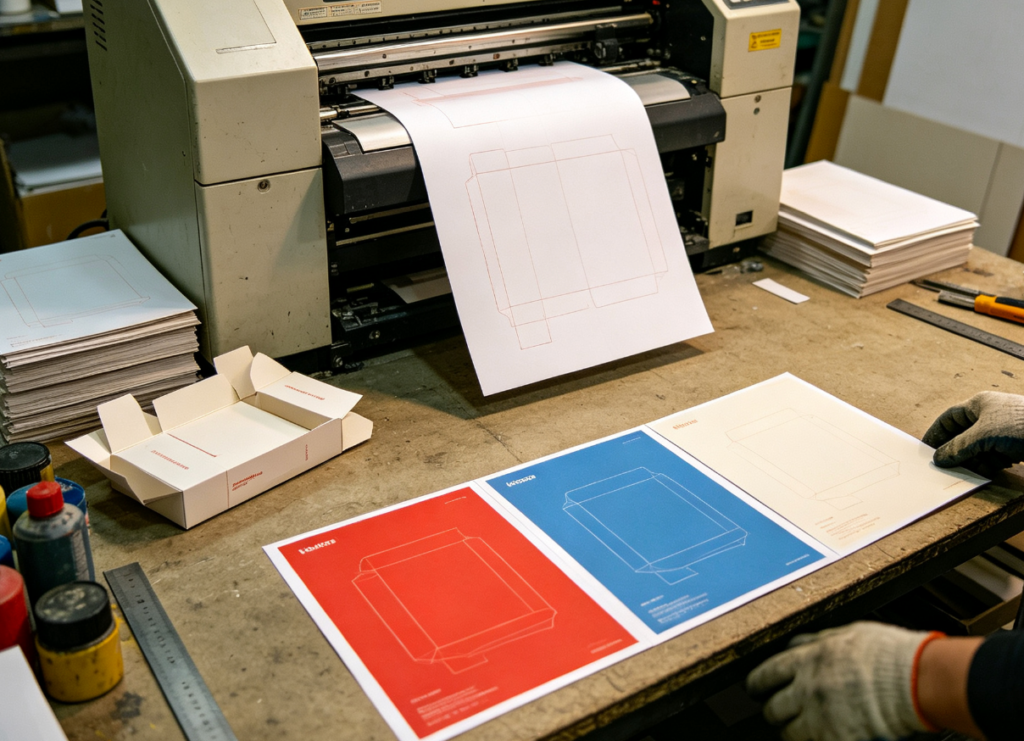
2. Color Difference: Why Does My Printed Packaging Look Different?
This is one of the more technical pain points brands run into, and one worth understanding properly rather than just hoping it works out.
Why the color on screen isn’t the color on the box
The color you see in your design file is never a guarantee of what comes off the press. Screen displays render color differently from print. Converting a design from RGB to CMYK shifts the color values. The paper stock itself — its texture, whiteness, and coating — absorbs ink differently depending on what it’s made of. Even the printing method and any finishing applied afterward, like lamination, can shift how a color reads once the box is in hand.
How Pantone matching helps — and where it doesn’t apply
Pantone gives brands a standardized color reference that doesn’t depend on any single screen or printer’s interpretation — the same Pantone code should produce the same result across different plate-printing runs and even different factories. This matters most for logos, signature brand colors, luxury packaging lines, and any product you plan to reorder repeatedly, since consistency across batches is exactly what Pantone matching is built to protect.
One thing worth being upfront about: true Pantone matching only applies to plate printing. Digital printing reproduces color by simulating it through CMYK or toner, so it can get close to a Pantone reference but can’t guarantee an exact ink match the way plate printing does. If your order falls under 200 pieces and needs digital printing, it’s still worth doing a proof — not to expect an exact Pantone match, but to check whether the resulting color difference is acceptable for your brand. Digital printing’s real advantage at that volume is cost, not color precision, so the proof is there to confirm the tradeoff works for you, not to chase a perfect match.
Always approve a proof before mass production
The safest sequence is straightforward: artwork, then a digital proof, then color approval, then production — in that order, every time. Skipping the proofing step to save a few days almost always costs more time later if the color comes back wrong on a full run. For plate-printed orders, we provide Pantone color matching and pre-production proofing specifically to catch these issues before they turn into a reprint.
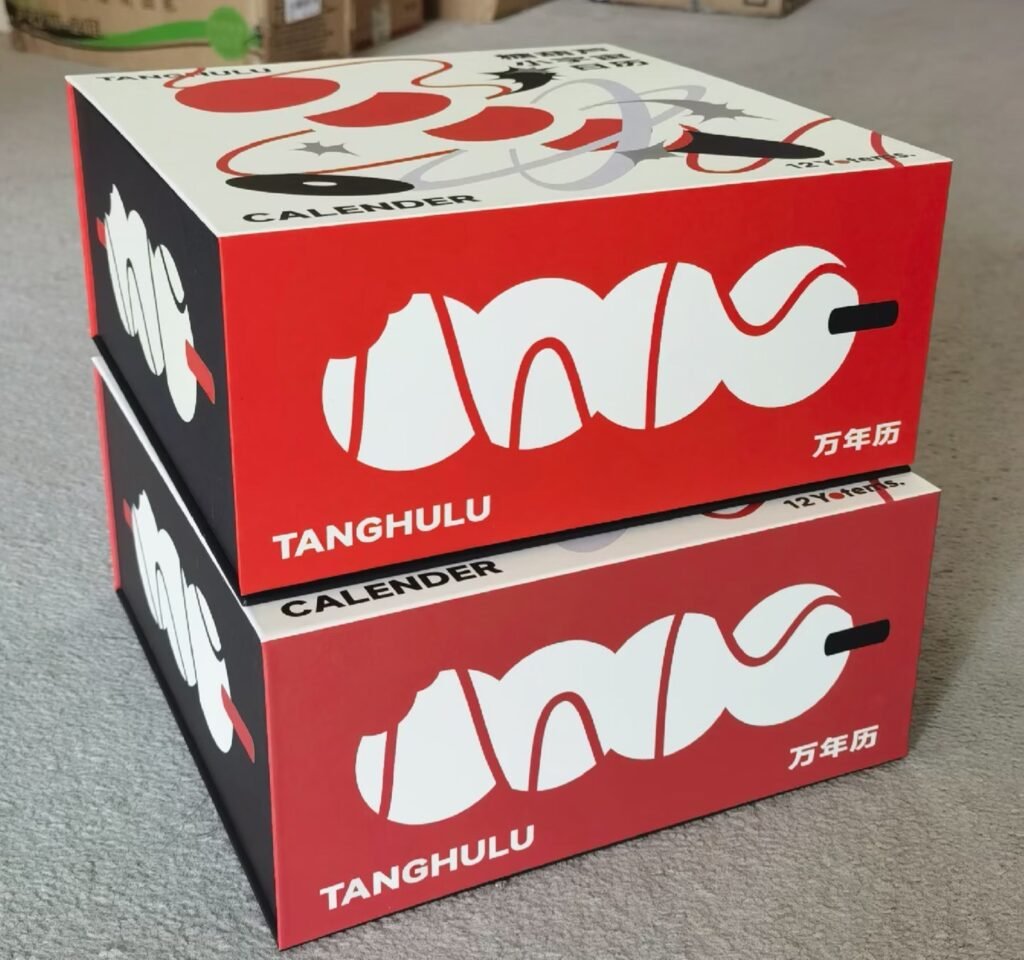
3. Can You Get Custom Packaging in 7 Days?
Lead time is usually the third question after MOQ and cost, and it deserves a straight answer rather than a blanket promise — because actual turnaround depends on several variables at once: the packaging structure, the printing method, the order quantity, any finishing involved, how quickly artwork gets approved, and the shipping method chosen at the end.
Why efficient short-run plate printing keeps things fast at 200–500 pieces
Plate-making does add a step compared to digital, but at the 200–500 piece range, our production line is set up to run this efficiently rather than treating it as a bottleneck — this is part of why we can offer both true Pantone matching and a reasonably fast turnaround in that volume range. For orders under 200 pieces, digital printing removes the plate-making step entirely, going straight from artwork to print, which is where digital’s speed advantage really shows up.
How to speed things up on your end
A few things within your control make a bigger difference than people expect:
- Have final artwork ready, not a work-in-progress file
- Confirm your dimensions before requesting a quote
- Decide on materials early rather than mid-process
- Approve proofs quickly once they’re sent
- Settle on a shipping method in advance
For selected small-batch packaging projects, production can be completed in around 7 days after artwork approval — which is a meaningfully different claim than “7 days for everything,” and a more honest one.
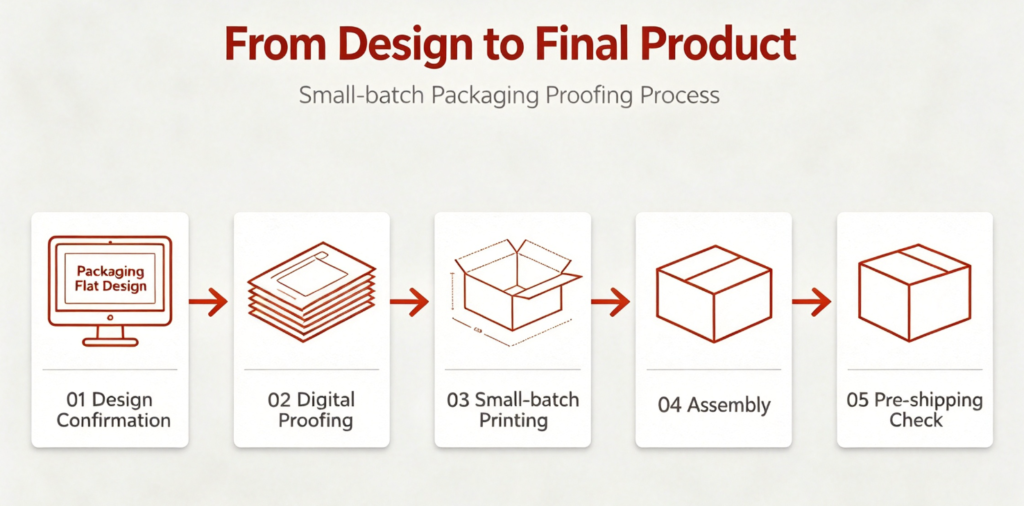
4. Does Low MOQ Packaging Cost More?
Here’s a question worth being upfront about, because the honest answer isn’t the one most sales pages lead with: yes, the per-unit cost of a small-batch order is usually higher than the same box ordered in bulk. That’s simply how fixed costs get distributed.
But per-unit price and total cost aren’t the same thing, and this is where the comparison actually favors a startup more often than it first appears.
Option A — 5,000 boxes at a lower unit price, but that means a large upfront investment, inventory sitting in storage, and real exposure if the product doesn’t sell as expected or the design needs to change.
Option B — 500 boxes at a higher unit price, but with a much smaller upfront investment, minimal inventory risk, and the flexibility to adjust before scaling up.
For a startup still validating demand, the lowest unit price isn’t always the lowest overall cost once storage, cash flow, and the risk of unsold inventory are factored in.
5. What If I Don’t Have a Professional Packaging Designer?
This is a common gap, and it’s not really about lacking a good product — it’s about not having packaging design experience in-house, which is a different skill entirely.
Start with your brand identity
Before any design conversation makes sense, you’ll want a few basics ready: your logo, your brand colors, product details, rough box dimensions, and a sense of who your target customer actually is.
Choose the right structure for your product
Mailer boxes, folding cartons, corrugated boxes, rigid boxes, and paper bags all solve different problems, and what works well for one product category often doesn’t translate to another — a skincare set and a piece of apparel don’t want the same structure just because they’re both “retail packaging.”
Keep your first design simple
For a first production run especially, it’s worth resisting the urge to add everything at once. Skip the complex structure, the long list of finishing techniques, the wide color palette, and the specialty material that adds cost without adding much visible value yet. A simple structure, strong and consistent branding, one or two finishing touches, and dimensions that actually fit the product will get you further than a design that tries to do too much on the first order.
6. What Is the Best Small-Batch Packaging Solution for Startups?
Pulling the five problems together:
| Problem | Traditional Approach | Small-Batch Solution |
|---|---|---|
| MOQ | 5,000+ pcs | 200–500 pcs (plate printing) / under 200 pcs (digital) |
| Printing | Large-run plate printing only | Efficient short-run plate printing, digital below 200 pcs |
| Color | Approximate matching | True Pantone matching (plate) / close CMYK match (digital) |
| Lead time | Longer setup process | Short-run production |
| Cost | Lower unit price | Lower upfront investment |
| Design | Customer handles everything | Guided packaging support |
7. Who Is Small-Batch Custom Packaging Actually For?
This approach isn’t the right fit for every order, but it tends to make the most sense for a fairly specific set of situations: startups launching a first product, DTC brands selling through Shopify, TikTok Shop, or Instagram, any product launch still being tested in the market, seasonal or limited-edition items tied to a specific window like a holiday drop, crowdfunding campaigns on platforms like Kickstarter or Indiegogo, and small e-commerce businesses that would rather not tie up cash in a warehouse full of boxes.
8. When Should You Move to Larger Production Runs?
Low-MOQ packaging is a starting point, not a permanent ceiling. Once demand becomes more predictable, the natural progression looks like this: low MOQ to test the market, repeat orders as the product proves itself, then larger production runs once volume justifies it. As order size grows, unit cost comes down, production becomes more efficient on the supplier’s end, and inventory planning gets a lot more predictable than it was during the testing phase.
In practical terms, this means a supplier who can handle your first 500-unit order should also be able to grow with you to 5,000 or 10,000 once you’re ready — which matters more for a long-term working relationship than any single order does.
Small-Batch Custom Packaging, Built for Where You Are Right Now
For startups and small brands not yet ready for bulk production, our small-batch service is built around a few specific commitments: efficient plate printing for orders from 200–500 pieces — one of our core production strengths, with digital printing available for anything smaller; true Pantone color matching on plate-printed orders to keep your brand consistent from the first run onward; production completed in around 7 days after artwork approval on selected projects; and design support to help you choose the right structure and finishing for your product and budget.
You don’t need to order 5,000 boxes to make your brand look like it belongs on the shelf. Start small, test your market, refine the packaging based on what you learn, and scale up once you actually have the order volume to justify it.
Ready to start with a small batch? Tell us your box size, quantity, and design requirements, and we’ll recommend a packaging solution that fits where your brand is right now.
I am available 24/7 to support your brand’s growth!
Get A Quote