
Custom Paper Bag Design, Size & Style Gallery for Brand Packaging

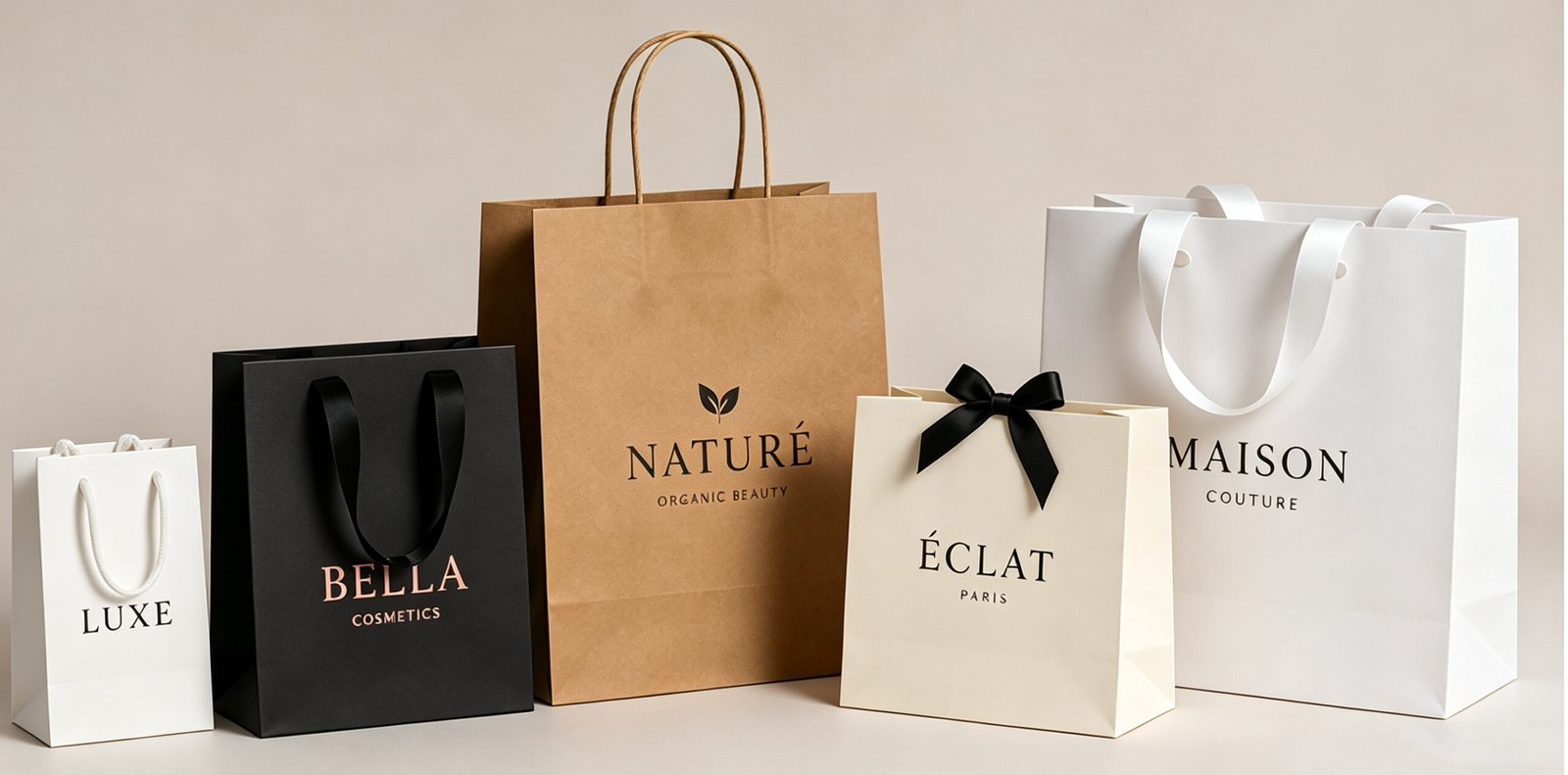
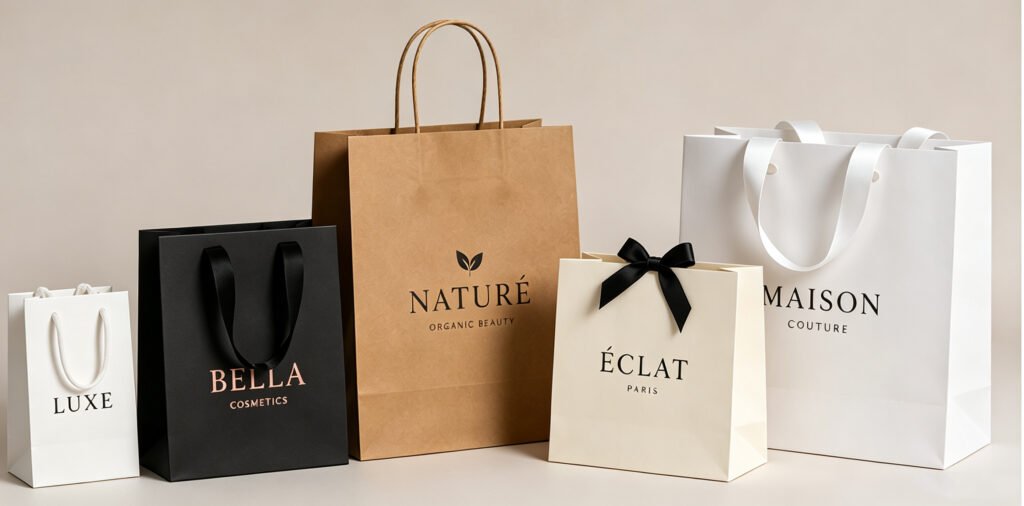
When a customer lifts your custom paper bag, they are interacting with your brand’s physical presence before they ever lay eyes on the product inside. In premium retail—from high-end skincare boutiques to luxury hospitality gift shops—the shopping bag functions as mobile advertising. It must simultaneously protect the goods, bear substantial vertical loads without structural failure, and project a premium brand alignment on the street.
However, a visually striking digital rendering often fails in real-world retail environments if the engineering details are overlooked. A bag that tears at the handle or drops its bottom under heavy load destroys customer trust instantly.
As a high-volume luxury shopping bag manufacturer, we’ve structured this technical gallery guide to walk you through the structural configurations, precise material weights, handle types, and internal reinforcements required to build a bag that customers actively reuse for months.
1. Matching Bag Style to Market Positioning
The paper weight, texture, and structural reinforcements of your carrier bag dictate your brand’s tier far more than printed graphics alone. In our manufacturing facility, we categorize custom production runs into four primary archetypes:
- Minimalist Retail Carriers: Constructed from solid white cardstock or premium unbleached kraft. Typically featuring a clean, single-point logo placement or subtle spot color. This is the dominant trend among modern DTC fashion and beauty brands that prioritize sharp, clean layouts.
- Textured Luxury Shopping Bags: Utilizing heavy-duty paper stocks (200gsm to 300gsm white cardstock), finished with anti-scratch matte lamination, deep blind embossing, or sharp hot metallic foil stamping. These are requested heavily by fine jewelry stores, high-end cosmetics counters, and luxury hotels where the bag is an integral part of the premium unboxing experience.
- Natural Kraft Utility Bags: Made from unbleached virgin brown kraft paper (120gsm–150gsm). It communicates an immediate eco-friendly, organic, or artisan brand message. This is the standard choice for specialty coffee roasters, organic bakeries, and sustainable lifestyle brands.
- Structured Keepsake Gift Bags: Heavy paperboard-reinforced bottoms, dense satin ribbon handles, and optional integrated closures (like hidden magnets or grosgrain bow ties). These are engineered primarily for high-end seasonal campaigns and corporate gifting.
2. Kraft Paper Bag Sizes: Technical Matrix
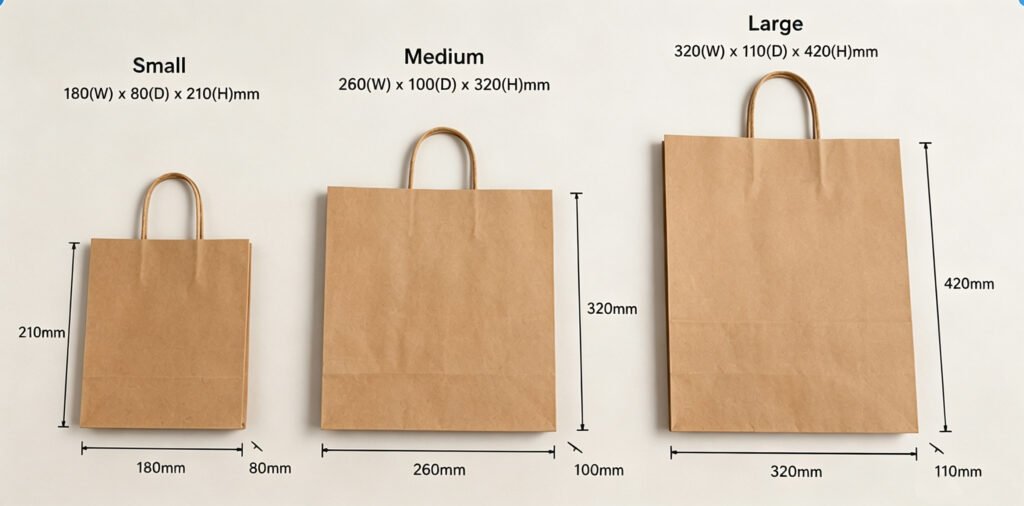
A common procurement pitfall is selecting a standardized size template that looks proportional on screen but fails to cradle the product inside. A bag that is too narrow strains the side gussets, while a bag that is excessively wide causes the contents to shift during walking, increasing the risk of product impact damage.
Below is the standard size and material weight baseline we recommend across major retail categories based on actual factory production data:
| Use Case Application Scenario | Typical Dimensions (W x D x H, cm) | Recommended Material Specification | Bottom Reinforcement (Base Board) |
|---|---|---|---|
| Small Accessories & Fine Jewelry | 15 x 8 x 20 cm | 150–170 gsm White Cardstock / Kraft | 250 gsm White Cardstock Patch |
| Cosmetics & Skincare Set Boxes | 20 x 10 x 25 cm | 170–210 gsm Coated Art Paper | 250 gsm White Cardstock Board |
| Apparel & Fashion (Folded Garments) | 25 x 12 x 32 cm | 150–200 gsm White Kraft / Art Paper | 300 gsm White Cardstock Board |
| Shoe Boxes & Heavy Bulk Retail | 32 x 16 x 40 cm | 200–250 gsm High-Density Cardstock | 300 gsm Heavy-Duty White Cardstock |
| Wine & Spirits (Single/Double Bottle) | 12 x 9 x 36 cm | 200–300 gsm Reinforced Kraft Paper | 300 gsm Heavy-Duty White Cardstock |
| Luxury Gift & Hospitality Packs | 30 x 15 x 35 cm | 250–300 gsm Premium Specialty Paper | 300 gsm Premium White Cardstock |
Note: While these serve as industry standard benchmarks, all manufacturing runs should be adjusted by 1–2 cm based on your product’s unique primary packaging dimensions to ensure smooth insertion.
3. Handle Materials: Tactile Feel and Load Capacity
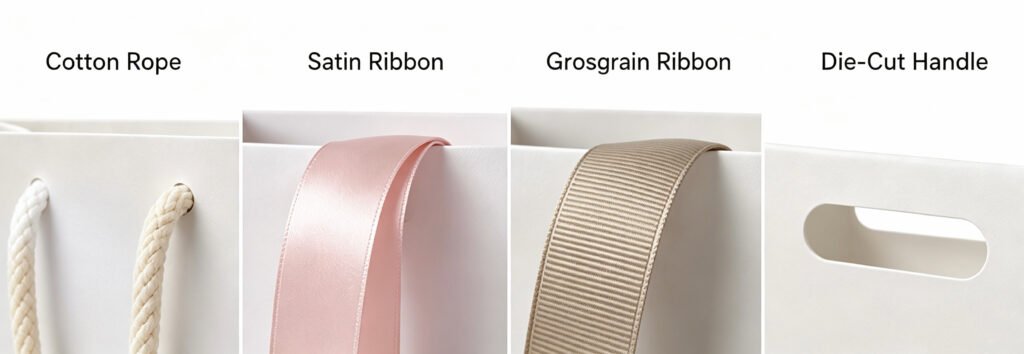
The handle is the primary stress point of the entire packaging system. It is tested structurally the exact second a buyer leaves your cash wrap. We utilize four main handle options, each yielding distinct visual and load-bearing performance profiles:
Premium Cotton Rope
The absolute staple for high-end fashion and cosmetic retail. Cotton rope offers a soft, substantial, and comfortable grip for the consumer. It is available in massive color arrays and can be factory-dyed to match your exact Pantone brand codes.
Polypropylene (PP) Rope
The practical choice when maximum tensile durability under repeated heavy use is the priority. PP rope is highly resistant to moisture, abrasion, and stretching. Because it maintains its structural shape tightly and holds lower raw material costs, it is the go-to selection for high-volume takeaway packaging and courier-adjacent transit bags.
Grosgrain / Satin Ribbon
Flat, woven ribbons with distinct ribbed or silky textures that instantly project a delicate, luxury gift aesthetic. Ribbon handles are ideal for lightweight boutique items, jewelry, and perfume boxes. They lie flat against the shoulder when carried and can be custom-printed with repeated step-and-repeat logo branding.
Die-Cut Handles
The grip is stamped and cut directly into the upper fold of the paper bag body itself. This layout requires zero extra material or secondary handle assembly labor, keeping your per-unit costs low. It delivers an ultra-clean, structural, and modern profile, but it is strictly suited for flat, lightweight merchandise, as the weight stress acts directly on the paper walls.
4. Handle Fixing Methods: Metal Grommets

How the handle attaches to the top fold determines the bag’s ultimate weight limit and overall visual simplicity.
HANDLE FIXING STRUCTURE COMPARISON
| EXPOSED GROMMETS / EYELETS |
| • Mechanism: Punched metal/plastic ring reinforces the folded paper layers. |
| • Load Profile: Heavy-Duty (Shoes/Bulk) |
| • Aesthetic: Industrial, intentional, hardware detail accent. |
Grommets / Eyelets (Exposed Mechanical Strength)
A metal ring is compressed through the double-layer top fold of the paper bag, and the handle rope is threaded and knotted behind it. This structure prevents the rope from tearing through the paper under vertical stress.
By distributing the weight across the rigid metal ring and the folded paper edge, it allows the bag to carry standard retail loads effortlessly. Brands frequently turn this structural necessity into a design element by utilizing matte black, brushed silver, or antique gold grommets to contrast against the paper color.
5. The Anatomy of a High-Quality Factory-Grade Paper Bag
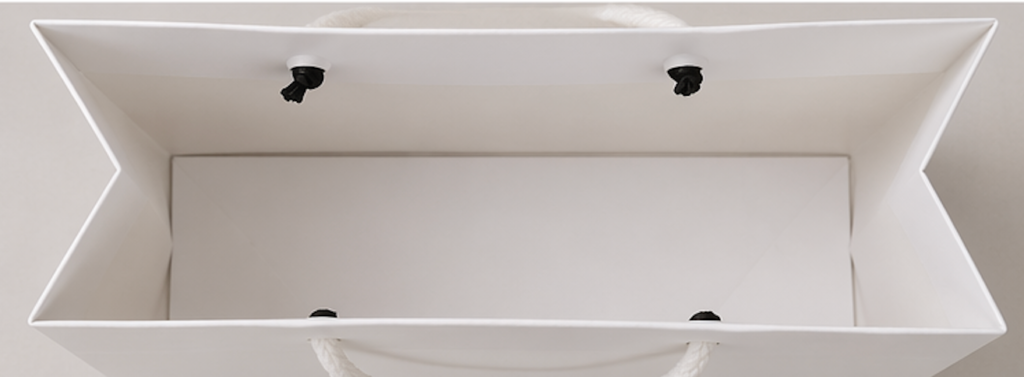
A truly premium paper bag relies on clever folding and base engineering to survive the retail journey:
- The Top Fold (Turn-Top): The upper rim of the bag folds inward by 3–5 cm. This creates a clean, durable double-layer paper thickness that provides the essential structural support where the handles attach, preventing the top rim from fraying or easily tearing.
- The Reinforced Bottom (Bottom Card): A loose paper bag bottom will sag and split. High-quality manufacturing requires a precision die-cut piece of 250gsm–300gsm white cardstock glued directly to the bottom interior gusset, keeping the bag perfectly flat, clean, and rigid under product weight without exposing rough raw boards.
FAQ
Why do the bottom seams of some paper bags split open in humid transit?
This is a common issue with factories using cheap, water-soluble chemical glues. In international ocean freight, humidity inside containers can dissolve low-grade adhesives. We utilize heavy-duty, industrial-grade hot melt glues and anti-moisture adhesives to ensure all structural seams remain permanently sealed under all weather conditions.
Secure Your Complimentary Structural Bag Sample & Mockup
Engineering a functional, high-end retail bag requires balancing the paper’s tear resistance with your actual fulfillment model and shipping budget. Don’t base your bulk orders on unverified digital templates.
Submit your primary product dimensions, total anticipated carry weight, and your brand logo assets to our manufacturing team. Our engineering department will calculate the optimal material parameters, recommend the correct handle configuration, and provide a flat dieline template to streamline your pre-production phase.
[Contact Our Engineering Team for a Custom Retail Bag Structural Layout Analysis]